Hello there!
I'm Charles, a senior frontend engineer at Michigan Creative in Ann Arbor. I build websites and web apps for University of Michigan units, and I care most about accessibility, speed, and giving the people who own the content a site they can run themselves.
src/
studio/              Sanity v3: editor-authored curriculum
migrations/          Drizzle ORM → Cloudflare D1
e2e/                 Playwright, scripted auth reset
docs/
  architecture.md    chapter gating · quiz progress
Selected work
Four recent projects. The rest are in the archive.
Principles of Pain Science
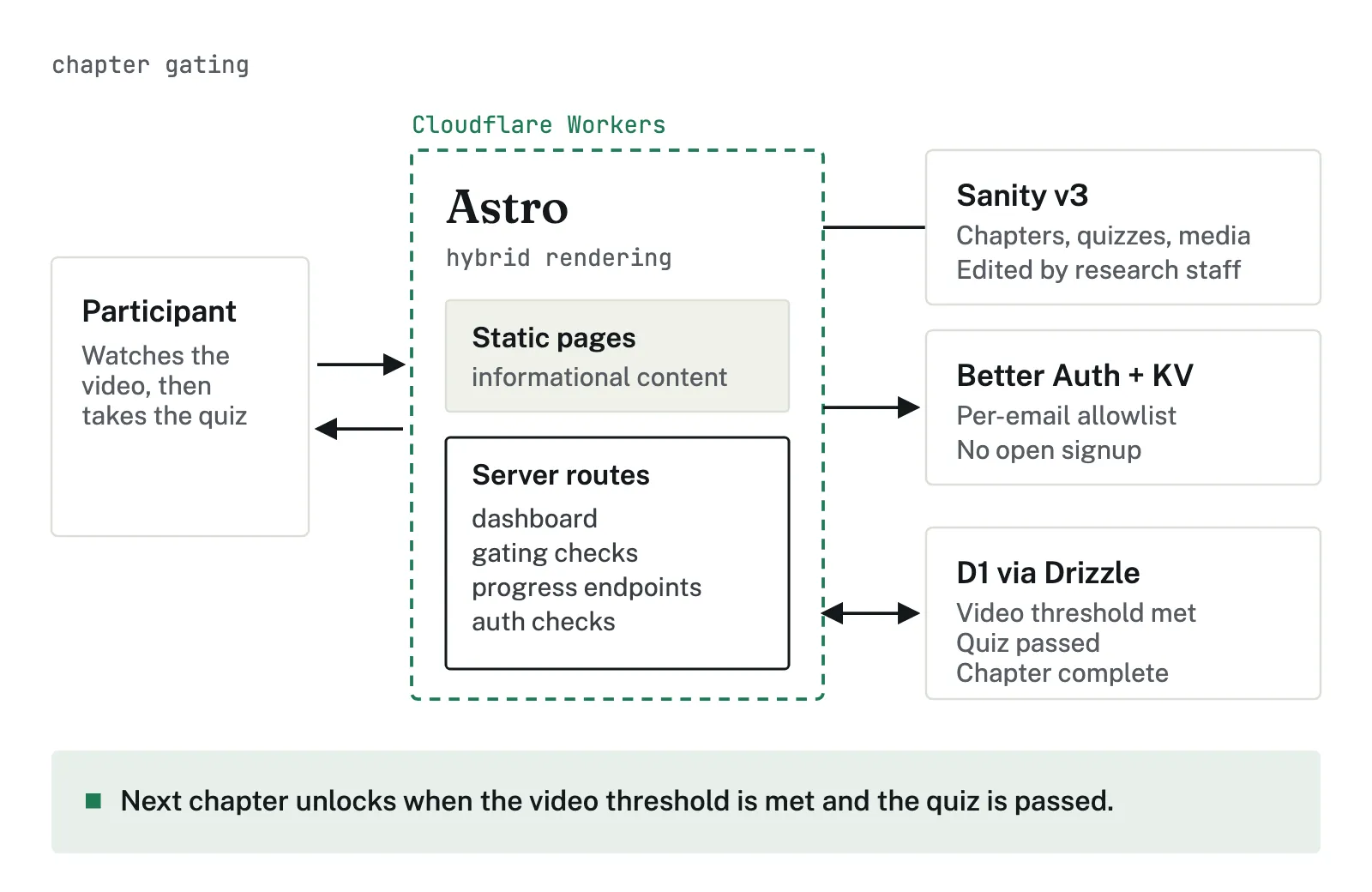
A learning platform for U-M's Chronic Pain & Fatigue Research Center. A chapter unlocks once a participant has watched enough of its video and passed the quiz, and that progress is stored per person in D1 so the team can report on it. The researchers write and edit all the curriculum in Sanity themselves, working from a training manual I wrote.
- Chapters unlock on watch time and quiz results
- Progress stored per user with Drizzle and D1
- Vitest for the gating rules, Playwright for the full participant flow
Roybal Chat
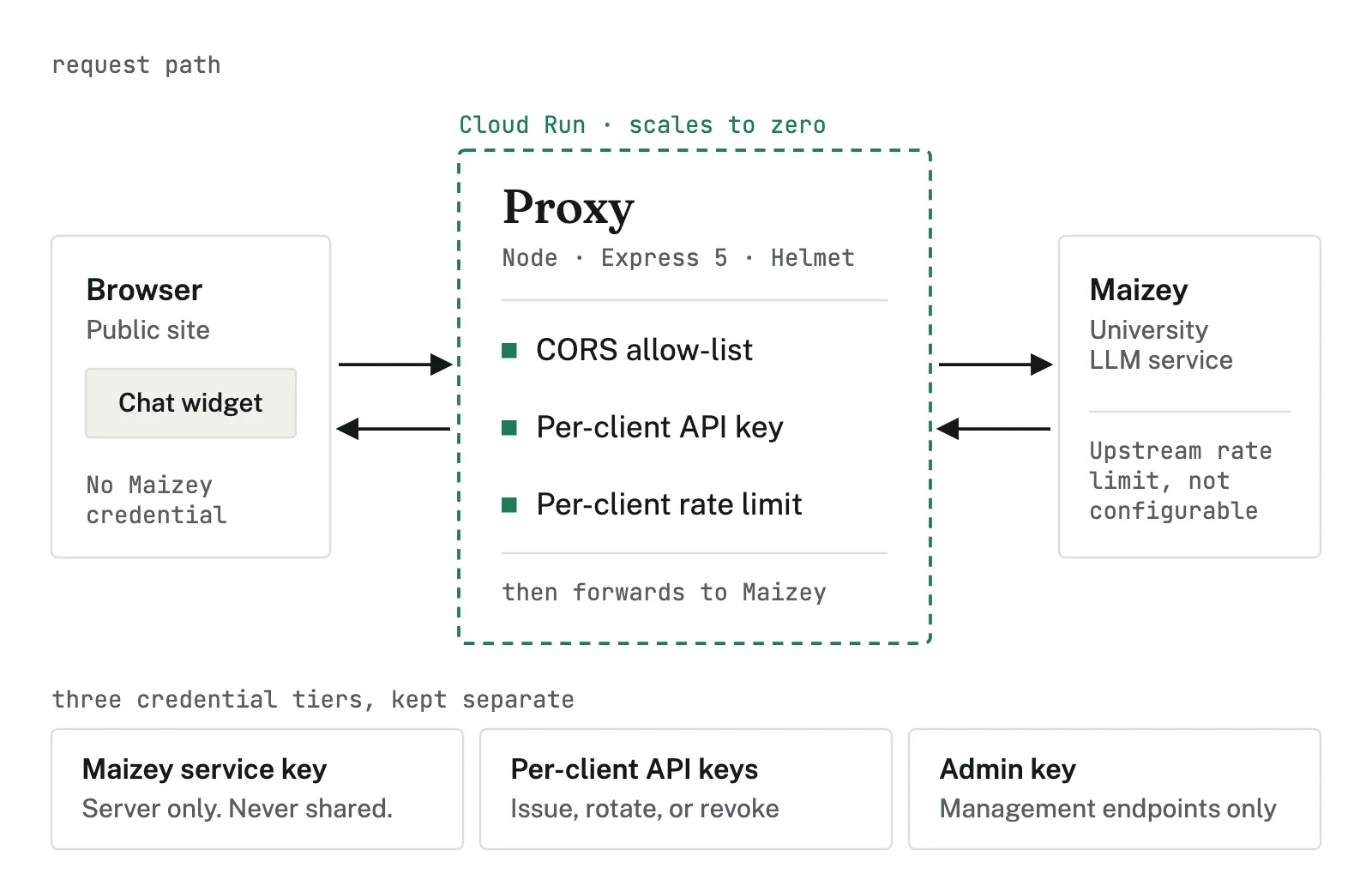
A small Node proxy between the Roybal Center's public chat widget and the University's internal Maizey LLM service. The Maizey credentials stay on the server. Each client site gets its own API key, CORS origin, and rate limit, so adding a new site takes a config change and a new key. It runs on Cloud Run and scales to zero when idle.
- Maizey credentials never reach the browser
- Per-client keys, CORS allow-list, and rate limits
Public Transit Accessibility & Disability Dashboard
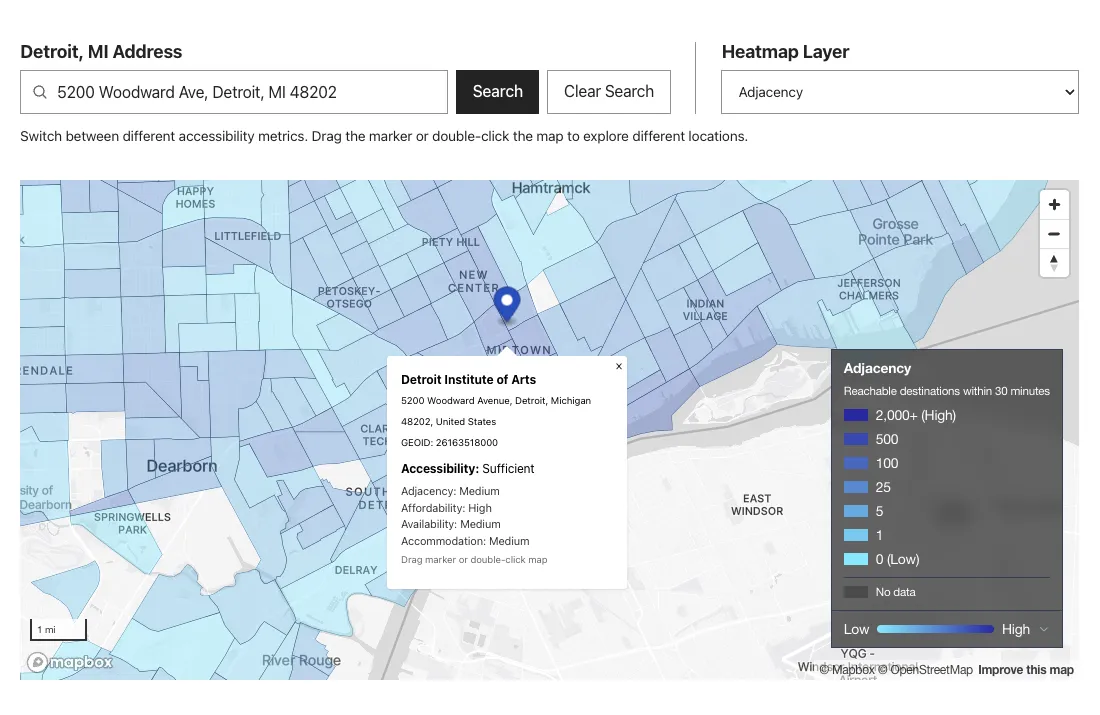
A public dashboard that scores transit accessibility for people with disabilities across 85 U.S. cities and 99 transit systems, on four dimensions: accommodation, adjacency, availability, and affordability. Visitors pick a state and city, then look up an address on the city page to see tract-level scores on a Mapbox heatmap. The scores live in D1 and get refreshed through a repeatable import path each time the research team hands off a new dataset. Disability advocates use it in conversations with local officials.
- Live for 85 U.S. cities
- Mapbox geocoding with a Census fallback
- Scores at the tract, agency, and city level
Pain Guide Platform
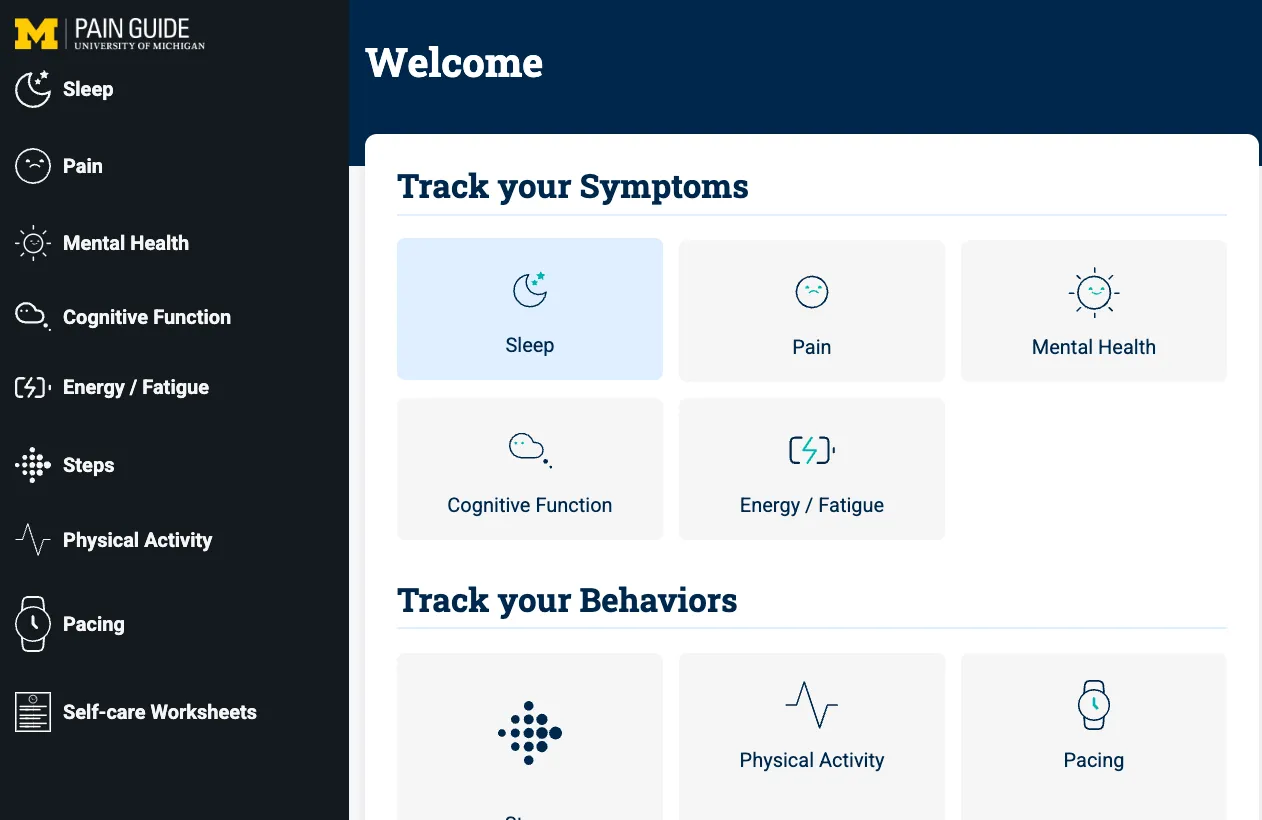
Pain Guide began as a design I made for a symptom-tracking site and grew into the platform behind about ten clinical trial sites, including BACPAC, PASC, sickle cell disease, and lupus. I led the move from markdown to Sanity, and I'm now building a shared base for the next sites, three of which are launching now.
- Each site has its own symptom domains and auth model
- Every site keeps its own Firebase backend, so one change never touches another trial's data
How I work
Accessibility
WCAG 2.1 AA is my minimum. pa11y-ci and axe run on every deploy, and on recent builds I've been testing against 2.2 as well.
Performance
Most of my sites are static, built with 11ty or Astro and served from Cloudflare. I set Core Web Vitals budgets at the start of a project and check against them as I build.
Servers where they're needed
Most pages stay static. When a project needs a server, like keeping an LLM key out of the browser or tracking a student's progress through a course, I add a small, typed one.